
Healing Together,
One Story At A Time
power of shared experience.
A compassionate community for widows to share, connect, and rediscover hope through the power of shared experience.
Shared Experience
Knowing you are not alone reduces the weight of isolation.
Collective Strength
We turn individual struggles into shared resilience.
Safe Spaces
We provide a compassionate environment to share and grow.


About us
Our Vision & Mission
Our Vision: We envision a world where widows feel seen, heard, and supported on their journey of healing and rediscovery.
Our Mission: To create a safe, compassionate community for widows to share, connect, and grow together, fostering resilience and empowerment.
The Core Concepts that Guide Us:
Empathy
Hearing others’ stories builds commonality and clears a path forward.
Vulnerability
We believe that sharing difficult experiences opens the door to mutual transformation.
Resilience
Together, we find the strength to navigate the challenges of widowhood.
Our Community – Finding Your Space
Connection is the Seed of Healing
We act as a gateway to support. Through our organized meetings and digital touchpoints, we offer:

Peer-Led Support Networks
Facilitated external meetings (digital and in-person) that connect widows with those who share their specific lived experience.

Curated Narrative Resources
Facilitated external meetings (digital and in-person) that connect widows with those who share their specific lived experience.

Community
Newsletters
Newsletters
Facilitated external meetings (digital and in-person) that connect widows with those who share their specific lived experience.

Support-System Education
Facilitated external meetings (digital and in-person) that connect widows with those who share their specific lived experience.
Why Us
Our Competitive Advantage
What sets Through Widows Eyes apart as a partner:
Specialized Focus
Unlike broad grief organizations, we focus exclusively on the intersection of widowhood and long-term rediscovery.
Gateway Model
By acting as a central hub for external meetings and resources, we maintain low overhead while maximizing community reach and scalability.
Trust-Based Engagement
Our community-first approach ensures high engagement rates and deep trust, which are critical for the success of government-funded social initiatives.
Scalable Narrative Framework
Our “One Story at a Time” model is easily adaptable across different cultures and languages, allowing for wide-scale social impact.

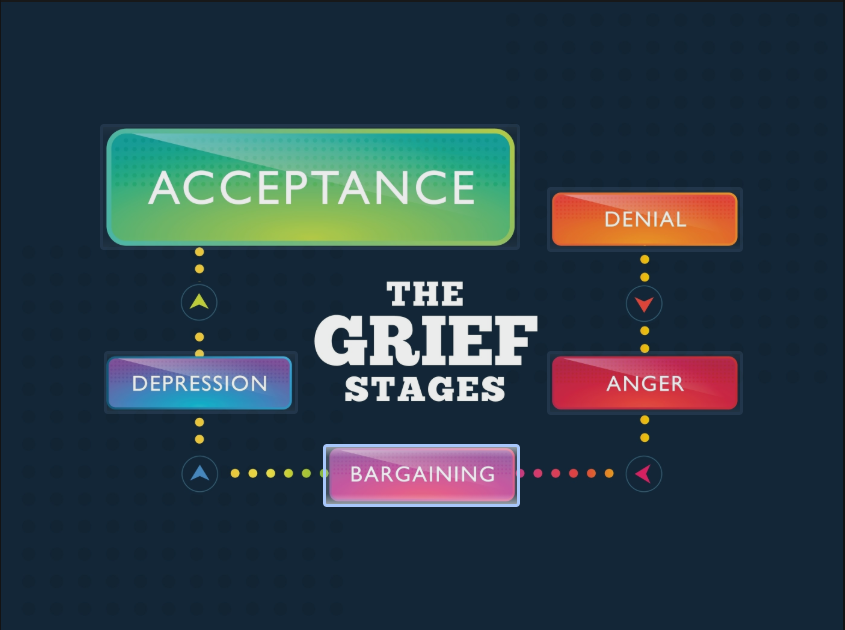
The Grief Stages
Overview
The image presents a model outlining the five stages of grief, which are a series of emotional responses to loss. These stages, originally proposed by Elisabeth Kübler-Ross, are not necessarily experienced in a linear order and can vary in intensity and duration for each individual. The model, often referred to as the Kübler-Ross model, provides a framework for understanding the complex process of grieving.
Denial
The first stage, Denial, serves as a defense mechanism, cushioning the initial shock of loss. Individuals in this stage may find it difficult to believe the reality of the situation, often feeling numb or in disbelief. This is a temporary response that helps us cope with the initial pain.
Anger
Together, we find the strength to navigate the challenges of widowhood.
Bargaining
The third stage, Bargaining, involves trying to regain control or postpone the inevitable. Individuals in this stage may make promises to a higher power or try to negotiate a different outcome. This stage is characterized by “what if” and “if only” statements, reflecting a need to avoid the pain of loss.
Depression
Following bargaining, the reality of the loss often leads to the fourth stage, Depression. This is not a sign of mental illness but a natural and appropriate response to a significant loss. It is characterized by sadness, emptiness, and a feeling of withdrawal from life’s activities.
Acceptance
The final stage, Acceptance, is about coming to terms with the reality of the loss. It does not necessarily mean happiness or that the pain is gone, but rather it signifies a point of understanding and moving forward. This stage is about learning to live with the loss and finding a new sense of normal.



Join Our Community
Receive our gentle newsletter for stories of resilience, upcoming meeting alerts, and resources for your journey.